顯示具有 Angela Yeh 標籤的文章。 顯示所有文章

2016年3月16日 星期三

#100daysafterparis - A Post-Paris ‘changement climatique’ Momentum Recap

Divest campaign  (Source: 350.org/Melbourne, Australia )

Angela Yeh, Climate and Energy Project Officer at Delta Electronics Foundation

It has been almost a hundred days since the Paris deal was adopted  – what has changed since the relative success of COP21? Are we rerouting to a trajectory that is not destined to self-destruction? Evidently, a three-month grace period offers only a peek into the changes and the potential changes post-Paris – nevertheless, the following efforts have taken place around the world:

In early March, the G20 meeting convened in Shanghai, where leaders of the worlds’ largest economies discussed, among many other things, the commitment to and implementations on green investment. The definition of green investment, though ambiguous, encompasses anything from renewables, energy efficiency, sustainable transportation to fossil fuel subsidy reform. Collectively, major economies pledged a staggering amount of 90 billion USD over the next decade on climate-related financing.

2015年4月15日 星期三

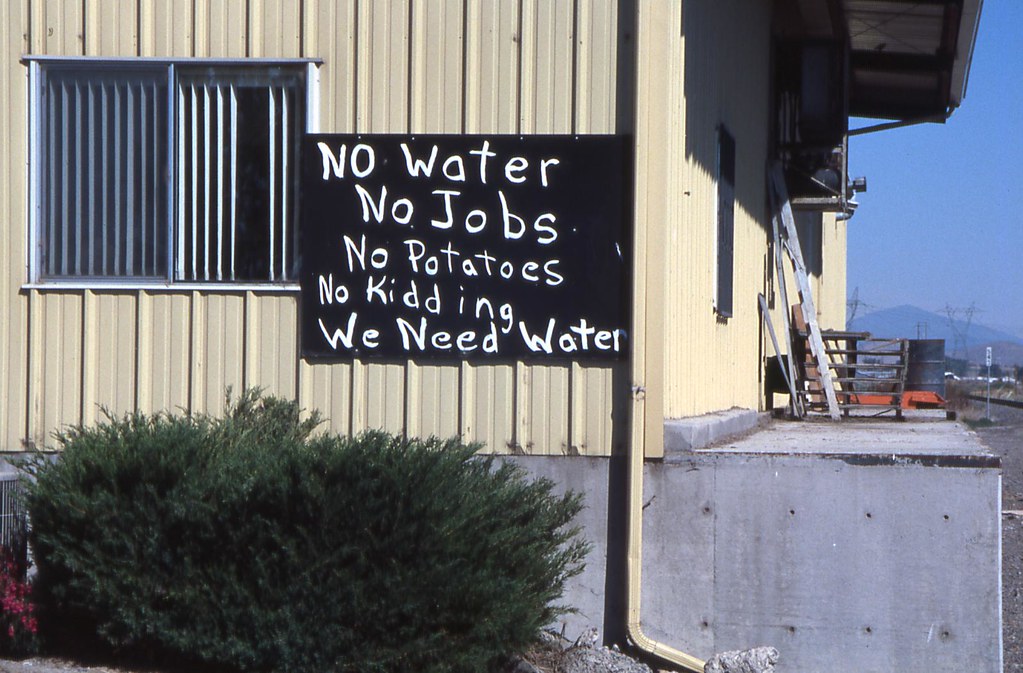
From California to Taipei – How Water Shortage Becomes the New Normal

Source:Oregon Department of Agriculture via Flickr

Angela Yeh, Climate and Energy Project Officer at Delta Electronics Foundation

Both the state of California and several cities in Taiwan have issued water rationing in the last few weeks. A quick google search will tell you that these two places are not alone in the fight against droughts – in fact, some parts of Africa and South America are facing the dire water shortage problem as it threatens the people’s basic livelihoods. In São Paulo for example, the economic heart of Brazil, the word ‘water refugee’ has emerged to describe population relocation as a result of droughts.

Although a certain degree of drought can be attributed to meteorological cycles, the persistence, severity and inconsistencies of droughts across the globe, is without a doubt, a product of anthropogenic climate change. Nevertheless, there are country-specific problems that have led to not only the inevitability of drought, but the exacerbation of it.

2015年2月12日 星期四

‘Lovers Love, Haters Hate’ – the issue with fossil fuels, nuclear, CCS and renewables – Can we afford to say no?

" ...the ‘2050 Calculator’ is a refreshing approach to thinking through how we might solve the misalignment of demand and supply. The concept of the calculator is one in which individuals can experiment with a wide range of behavioral decisions and tolerance for energy options."
Young female polar bear (Source:Michael Bamford flickr, CC BY-NC-ND 2.0)

Angela Yeh, Climate and Energy Project Officer at Delta Electronics Foundation

The short but sweet visit of the Former UK Chief Scientific Advisor of DECC (Department of Climate Change and Energy), Prof. David Mackay, brought with him – not only his scientific insights on global warming, but also a paradigm-shifting-type of thinking to the very stagnant energy policy conversation in Taiwan. Weeks before Prof. Mackay’s visit, Taiwan held its National Energy Conference. And as most national meetings go, regardless of subject, very limited (if any) consensus was reached. I apologize that this post will not be about the gridlock of the energy debate in Taiwan (as interesting as it otherwise would have been) – but will be about why and how we should view the energy problem with, hopefully, a fresher pair of lens.

英國能源暨氣候變遷部前首席科學顧問專家,大衛‧馬凱教授(David Mackay)短暫但親切地拜訪台灣,他所分享的不僅是對全球暖化的科學見解,也為停滯不前的台灣能源政策,帶來能促使典範移轉的思考。其實就在馬凱教授來訪前,台灣才召開了全國能源會議,如同大多數的國家級會議,這場會議達成共識有限。很抱歉這篇文章並非要談台灣能源論辯的僵局,而是關於我們為何,以及該如何以更不落伍的視角,希望如此,來看待能源問題。

2014年7月25日 星期五

Australia Kills Carbon Tax – If and Why There Is Still Hope

The main campaign slogan of  Tony Abbot, Prime Minister of Australia, was to abolish the carbon tax.
Via website of Liberal Australia.
By Angela Yeh, Climate and Energy Project Officer of Delta Electronics Foundation

Last week, the Australian government repealed the first market-based carbon tax mechanism that was established among developed countries. The decision not only undermined at least a decade of efforts leading up to the trading scheme (that only lasted for two years), but also diminished the world’s confidence on Australia’s leadership (or the lack of it) on climate change.